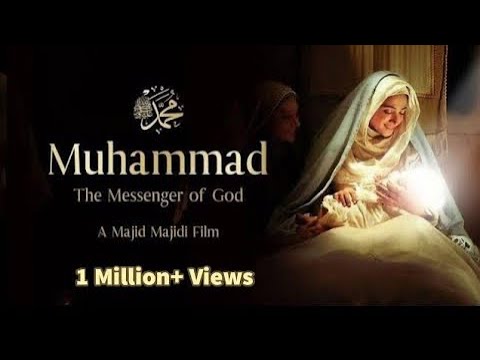
Born approximately 570 CE (Year of the Elephant) in the Arabian city of Mecca, Muhammad was orphaned at the age of six.[6] He was raised under the care of his paternal grandfather Abd al-Muttalib, and upon his death, by his uncle Abu Talib.[7] In later years, he would periodically seclude himself in a mountain cave named Hira for several nights of prayer. When he was 40, Muhammad reported being visited by Gabriel in the cave[8][9] and receiving his first revelation from God. In 613,[10] Muhammad started preaching these revelations publicly,[11] proclaiming that “God is One“, that complete “submission” (islām) to God[12] is the right way of life (dīn),[13] and that he was a prophet and messenger of God, similar to the other prophets in Islam.[14][15][16]
Muhammad’s followers were initially few in number, and experienced hostility from Meccan polytheists. To escape ongoing persecution, he sent some of his followers to Abyssinia in 615, before he and his followers migrated from Mecca to Medina (then known as Yathrib) later in 622. This event, the Hijra, marks the beginning of the Islamic calendar, also known as the Hijri Calendar. In Medina, Muhammad united the tribes under the Constitution of Medina. In December 629, after eight years of intermittent fighting with Meccan tribes, Muhammad gathered an army of 10,000 Muslim converts and marched on the city of Mecca. The conquest went largely uncontested and Muhammad seized the city with little bloodshed. In 632, a few months after returning from the Farewell Pilgrimage, he fell ill and died. By the time of his death, most of the Arabian Peninsula had converted to Islam.[17][18]
The revelations (each known as Ayah — literally, “Sign [of God]”) that Muhammad reported receiving until his death form the verses of the Quran, regarded by Muslims as the verbatim “Word of God” on which the religion is based. Besides the Quran, Muhammad’s teachings and practices (sunnah), found in the Hadith and sira (biography) literature, are also upheld and used as sources of Islamic law (see Sharia).
Hindu Calendar 2022 – हिंदू कैलेंडर 2022 READ ONLINE
Friends, Here we are going to upload the हिंदी पंचांग कैलेंडर 2022 PDF / Hindu Calendar 2022 with Tithi PDF in Hindi for our users. In this calendar you can watch out for the list of festivals to be celebrated in India in the year 2022, this calendar, fasting, sunrise, sunset, monthly holidays, and much more. This is a month-wise list of most Hindu festivals in the year 2022. Most of the Hindu festivals are determined based on the position of the Sun and the Moon. In this article, you can download the हिंदी पंचांग कैलेंडर 2022 PDF / Hindu Calendar 2022 with Tithi in Hindi PDF
हिंदी पंचांग कैलेंडर 2022 PDF | Hindu Calendar 2022 with Tithi Hindi PDF – Detail
Please visit Hindu Festivals as per Lunar month to know in which Lunar month festivals are celebrated. Hindu Festivals depend on location and might differ between two cities and the difference is quite noticeable for cities in different time zone. Hence one should set the location before looking into the festival list.
Hindu festivals calendar is also known as Hindu Vrat and Tyohar calendar. The fasting is known as Vrat or Upavas and the festival is known as Tyohar or Parva in the local language. Most Hindu festival calendars include significant fasting days along with festivals. Many Hindu festivals are celebrated while keeping a day-long fast on the festival day. Hence in Hinduism Tyohar(s) is time for celebrations, deity worship, and austerity.
Born approximately 570 CE (Year of the Elephant) in the Arabian city of Mecca, Muhammad was orphaned at the age of six.[6] He was raised under the care of his paternal grandfather Abd al-Muttalib, and upon his death, by his uncle Abu Talib.[7] In later years, he would periodically seclude himself in a mountain cave named Hira for several nights of prayer. When he was 40, Muhammad reported being visited by Gabriel in the cave[8][9] and receiving his first revelation from God. In 613,[10] Muhammad started preaching these revelations publicly,[11] proclaiming that “God is One“, that complete “submission” (islām) to God[12] is the right way of life (dīn),[13] and that he was a prophet and messenger of God, similar to the other prophets in Islam.[14][15][16]
Muhammad’s followers were initially few in number, and experienced hostility from Meccan polytheists. To escape ongoing persecution, he sent some of his followers to Abyssinia in 615, before he and his followers migrated from Mecca to Medina (then known as Yathrib) later in 622. This event, the Hijra, marks the beginning of the Islamic calendar, also known as the Hijri Calendar. In Medina, Muhammad united the tribes under the Constitution of Medina. In December 629, after eight years of intermittent fighting with Meccan tribes, Muhammad gathered an army of 10,000 Muslim converts and marched on the city of Mecca. The conquest went largely uncontested and Muhammad seized the city with little bloodshed. In 632, a few months after returning from the Farewell Pilgrimage, he fell ill and died. By the time of his death, most of the Arabian Peninsula had converted to Islam.[17][18]
The revelations (each known as Ayah — literally, “Sign [of God]”) that Muhammad reported receiving until his death form the verses of the Quran, regarded by Muslims as the verbatim “Word of God” on which the religion is based. Besides the Quran, Muhammad’s teachings and practices (sunnah), found in the Hadith and sira (biography) literature, are also upheld and used as sources of Islamic law (see Sharia).
Mukhtar Nama Episode 1 | Urdu HD | Waqia e Karbala |مختارنامہ اردو | واقعہ کربلا |
The playlist identified with the request's playlistId parameter cannot be found.
Al-Mukhtar ibn Abi Ubayd Al-Thaqafi (Arabic: ٱلْمُخْتَار ٱبْن أَبِي عُبَيْد ٱلثَّقَفِيّ, al-Mukhtār ibn Abī ʿUbayd al-Thaqafīy; c. 622 – 3 April 687) was a pro-Alid revolutionary based in Kufa, who led a rebellion against the Umayyad Caliphate in 685 and ruled over most of Iraq for eighteen months during the Second Fitna.
Born in Ta’if, Mukhtar moved to Iraq at a young age and grew up in Kufa. Following the death of Husayn ibn Ali, a grandson of the Islamic prophet Muhammad, at the hands of the Umayyad army in the Battle of Karbala in 680, he allied with the rival caliphAbd Allah ibn al-Zubayr in Mecca, but the alliance was short-lived. Mukhtar returned to Kufa where he declared Muhammad ibn al-Hanafiyyah, a son of caliph Ali (r. 656–661) and brother of Husayn, the mahdi and the imam, and called for the establishment of an Alid caliphate and retaliation for Husayn’s killing. He took over Kufa in October 685, after expelling its Zubayrid governor, and later ordered the execution of those involved in the killing of Husayn. Hostile relations with Ibn al-Zubayr ultimately led to Mukhtar’s death by the forces of the Zubayrid governor of Basra, Mus’ab ibn al-Zubayr, following a four-month siege.
Although Mukhtar was defeated, his movement would have far-reaching consequences. After his death, his followers formed a radical Shi’a[a] sect, later known as the Kaysanites, who developed several novel doctrines and influenced later Shi’a ideology. Mukhtar raised the social status of mawali (local converts to Islam) and they became an important political entity. The mawali and Kaysanites went on to play a significant role in the Abbasid Revolution sixty years later. Mukhtar is a controversial figure among Muslims; condemned by many as a false prophet, but revered by Shi’a because of his support for the Alids. Modern historians’ views range from regarding him as a sincere revolutionary to an ambitious opportunist.
HAZRAT YOUSUF A.S HD IN Parts FULL MOVIE IN Urdu / Hindi
Yūsuf ibn Yaʿqūb ibn Isḥāq ibn ʾIbrāhīm (Arabic: يُوسُف ٱبْن يَعْقُوب ٱبْن إِسْحَاق ٱبْن إِبْرَاهِيم) is a prophet mentioned in the Quran,[1] and corresponds to Joseph (son of Jacob), a person from the Tanakh, the Jewish religious scripture, and the ChristianBible, who was estimated to have lived in the 16th century BCE.[2] It is one of the common names in the Middle East and among Muslim nations. Of all of Jacob’s children, Joseph was the one given the gift of prophecy. Although the narratives of other prophets are mentioned in various Surahs, the complete narrative of Joseph is given only in one Surah, Yusuf, making it unique. It is said to be the most detailed narrative in the Qur’an and bears more details than the Biblical counterpart.[3]
Yusuf is believed to have been the eleventh son of Yaʿqūb (Arabic: يَعْقُوب, Jacob), and, according to many scholars, his favorite. According to Ibn Kathir, “Jacob had twelve sons who were the eponymous ancestors of the tribes of the Israelites. The noblest, the most exalted, the greatest of them was Joseph.”[4] The story begins with Joseph revealing a dream he had to his father, which Jacob recognizes.[5] In addition to the role of God in his life, the story of Yusuf and Zulaikha (Potiphar’s wife of the Old Testament) became a popular subject in Persian literature, where it became considerably elaborated over the centuries.[6
The story of Joseph in the Qurʾān is a continuous narrative. There are more than one hundred verses, and in totality they encompass many years and “present an amazing variety of sciences and characters in a tightly-knit plot, and offer a dramatic illustration of some of the fundamental themes of the Qurʾān.”[7] The Qurʾān itself relates to the story’s importance in the third verse: “and We narrate unto you aḥsanal-qaṣaṣ (Arabic: أَحْسَنَ ٱلْقَصَص, “best (or most beautiful) of stories”).” Most scholars believe this is referring to Joseph’s story, while others, including Ṭabari, argue it is a reference to the Qurʾān as a whole.[8] It asserts and documents the execution of God’s rulings despite the challenge of human intervention (“And Allah hath full power and control over His affairs; but most among mankind know it not”).[9]
This is what the story of Yūsuf confirms categorically, for it ends with comfort and marvels, which is described in the Qurʾān. Along with the story there is also some commentary from some leading scholars of Islam.
Muhammad at-Ṭabari provides exquisite detail and commentary of this narrative in his chapter on Joseph relaying the opinions of well-known scholars. In Ṭabari’s chapter, the physical beauty of Joseph and his mother Rachel is introduced, in that they were said to have had “more beauty than any other human being.”[10] His father, Jacob, had given him to his oldest sister to be raised. Ṭabari comments that there was no greater love than what Joseph’s aunt felt for him as she had raised him as her own. And she was very reluctant to give him back to Jacob and kept him until her death. The reason, according to Ṭabari, that she was able to do this was because of a belt that had been passed to her from her father, Isaac. Ṭabari notes “if someone else acquired it by guile from the person who was supposed to have it, then he would become absolutely subject to the will of the rightful owner.”[11] This is important because Joseph’s aunt puts the belt on Joseph when Jacob is absent and then accuses Joseph of stealing it and he thus stays with her until her death. Jacob was very reluctant to give up Joseph and thus favors him when they are together. This is commentary but, as is the profession of commentators, this provides an interesting set up to Joseph’s personal story and also lays a foundation for a future interaction with his brothers, particularly Benjamin.
The dream
The story begins with a dream and ends with its interpretation. As the sun appeared over the horizon, bathing the earth in its morning glory, Joseph, son of Jacob awoke from his sleep, delighted by a pleasant dream he had. Filled with excitement he ran to his father and reported what he had seen.
Yusuf said to his father: “O my father! I did see eleven stars and the sun and the moon: I saw them prostrate themselves to me!— Qur’an, Surah 12 (Yusuf) Ayah 4[12]
According to Ibn Kathir, Jacob knew that Joseph would someday become extremely important and would be in a high position, both in this world and the next—he recognized that the stars represented his brothers and the sun and moon represented himself and Joseph’s mother, Rachel. Jacob advised Joseph to keep the dream to himself in order to protect him from the jealousy of his brothers, who were already unhappy about the love Jacob felt for Joseph.[13] Ya’qub foresaw that Yusuf would be one through whom the prophecy of his grandfather, Ibrahim (Abraham), would be fulfilled, in that his offspring would keep the light of Abraham’s house alive and spread God’s message to mankind. Abu Ya’ala interpreted Jacob’s reaction as an understanding that the planets, sun and moon bowing to Joseph representing “something dispersed which God united.”[13]
Ya’qub told Yusuf: “My son, relate not thy vision to thy brothers, lest they concoct a plot against thee: for Satan is a clear enemy to humanity. Thus your Lord has selected you and given you knowledge to interpret reports, and has perfected his blessing upon you and upon the family of Jacob just as he perfected it on your forefathers before: Ibrahim and Is-haq (Isaac). Your Lord is Knowing, Wise” (Qur’an, Surah 12 (Yusuf) Ayat 5-6).[14]
Joseph did not tell his brothers his dream, unlike in the version relayed in the Hebrew Bible, but their dislike of him was already too strong to subdue. Ṭabari demonstrates this by adding that they said to each other, “verily Joseph and his brother (Benjamin) are dearer to our father than we are, though we may be a troop (‘usbah). By usbah they meant a group, for they were ten in number. They said, “Our father is plainly in a state of aberration.””[15]
Joseph was known, in addition for being very handsome, to be of gentle temperament. He was respectful, kind and considerate. His brother Benjamin was equally pleasant and both were from the same mother, Rachel. From a hadith (Arabic: حَدِيث, ‘narration’):
Narrated Abu Huraira: Some people asked the Prophet: “Who is the most honorable amongst the people?” He replied, “The most honorable among them is the one who is the most Allah-fearing.” They said, “O Prophet of Allah! We do not ask about this.” He said, “Then the most honorable person is Yusuf, Nabiyyullah (Arabic: نَـبِيُّ الله, Prophet of Allah), the son of a Nabiyyillah, the son of a Nabiyyillah, the son of Khalilillah (Arabic: خَـلـيـلِ الله, “Friend of Allah”).”— Sahih al-Bukhari collected by Muhammad al-Bukhari[16]
ریاستی دارالحکومت بنگلور سے 70 کلومیٹر دور، ٹیپو سلطان کے زمانے میں بسایا گیا یہ گاؤں ڈھائی صدی سے ریاست میں سب سے بڑی شیعہ آبادی کے طور پر اپنی حیثیت برقرار رکھے ہوئے ہے۔ اس گاؤں کی تقریباً 99 فیصد آبادی شیعہ ہے اور شاید اسی لیے اسے انڈیا کا ‘چھوٹا ایران’ بھی کہا جاتا ہے۔
اس گاؤں کی شیعہ آبادی کے علاوہ ایک اور خاص بات یہاں کے رہائشیوں کی قابلِ ذکر تعداد کا قوتِ گویائی و سماعت سے محروم ہونا بھی ہے جس کی بڑی وجہ خاندان میں ہی کی جانے والی شادیاں بتائی جاتی ہے۔
اس گاؤں میں بچوں سے لے کر بالغ افراد تک مختلف عمر کے تقریباً 200 سے زیادہ ایسے افراد موجود ہیں جو قوتِ سماعت و گویائی سے محروم ہیں اور وہ اشاروں کی ایک ایسی زبان میں گفتگو کرتے ہیں جسے مقامی طور پر ہی بنایا گیا ہے۔سننے اور بولنے کی صلاحیت سے محروم انسانوں کو 1400 سال قبل کربلا میں نواسہ رسول اور ان کے خاندان کے ساتھ پیش آنے والے واقعات کے بارے میں بتانا اور سمجھانا کوئی آسان کام نہیں مگر علی پور والوں نے اس کا حل اشاروں کی زبان میں مجلسِ عزا کی شکل میں نکالا ہے۔
کچھ دن پہلے ٹوئٹر پر علی عابدی نامی صارف نے ایک ویڈیو شیئر کی جس میں دیکھا جا سکتا تھا کہ ایک چھوٹے سے کمرے میں چند درجن افراد جن میں سے زیادہ تر نوعمر تھے ایک کرسی پر بیٹھے سیاہ پوش شخص سے اشاروں کی زبان میں کچھ سمجھنے کی کوشش کر رہے ہیں۔
کمرے کی دیوراوں پر لگی سیاہ چادورں، علم کی شبیہ اور شرکائے مجلس کے سیاہ لباس سے یہ تو معلوم ہو رہا تھا کہ یہ محرم کے حوالے سے منعقد کیے گئے کسی پروگرام کی ویڈیو۔
ٹویٹر پر ویڈیو شئیر کرنے والے صارف نے ساتھ لکھا تھا ‘انڈیا میں واقع میرے گاؤں علی پور میں ہر محرم میں قوتِ سماعت و گویائی سے محروم افراد کے لیے مجلس بپا کی جاتی ہے۔ کیونکہ ‘اہلیبیت اور امام حسین کا پیغام سب تک پہنچنا چاہیے۔’
بی بی سی نے اس گاؤں کے چند رہائشیوں سے بذریعہ ٹیلی فون رابطہ کیا جن میں نکیر سید بھی شامل تھے۔ ان کا کہنا تھا کہ ابتدا میں گونگے اور بہرے افراد عام مجالس میں جاتے تو تھے لیکن ایک طرف بیٹھے رہتے تھے۔ ‘انھیں کچھ سمجھ میں نہیں آتا تھا کہ یہ کیا ہو رہا ہے، کیا بولا جا رہا ہے، کوئی ان سے کچھ شئیر نہیں کرتا تھا۔
نکیر سید کہتے ہیں ‘قوتِ سماعت و گویائی سے محروم افراد میں حساسیت اور وابستگی کا احساس ایک عام انسان کی نسبت زیادہ ہوتا ہے۔’ اور اسی احساس نے آج سے 13 سال قبل یہاں کے ایک رہائشی میر فاضل رضا کو ان افراد کے لیے کچھ کرنے پر مجبور کیا اور انھوں نے ‘اہلبیت ڈیف سینٹر’ کی بنیاد رکھی۔
بی بی سی سے بات کرتے ہوئے میر فاضل رضا کا کہنا تھا کہ ایک دن میرے والد نے مجھ سے کہا ‘حسین کا پیغام ان تک نہیں پہنچ پا رہا۔۔۔ فاضل ان بچوں کے لیے کچھ کرو’۔
اپنے والد کی خواہش کا پاس رکھتے ہوئے فاضل نے ایسے افراد کی مدد کی ٹھان لی اور پہلے اپنے گاؤں کی مخصوص سائن لینگوئج اور پھر بعد میں انڈین سائن لینگوئج سیکھی۔
وہ کہتے ہیں کہ ‘پہلے تو میں ان علما سے پوچھا کہ کیا ان بچوں پر بھی وہی شرعی احکامات لاگو ہوتے ہیں جو دوسرے بچوں کے لیے ہیں؟ علما کے مشورے کے بعد ہی میں نے اس کام کا بیڑا اٹھایا۔’
فاضل کہتے ہیں کہ ‘ایک عام بچے کی طرح قوتِ سماعت و گویائی سے محروم بچوں کو بھی حلال، حرام سے لے کر دین و دنیا کے دیگر معاملات کی سمجھ ہونی چاہیے’۔
لہٰذا انھوں نے ان بچوں کے لیے دینی و دنیاوی تعلیم سے لے کر انھیں مختلف ہنر سکھانے کے لیے ‘علی پور ڈیف سوسائٹی’ بنائی جس کا نام اب تبدیل ہو کر ‘اہلیبیت ڈیف سینٹر’ ہے۔
فاضل، علی پور کی سائن لینگوئج اچھی طرح سے سمجھتے ہیں اور زیادہ تر مجالس میں یا تو وہ عالم کے ساتھ بیٹھ کر شرکا کے لیے مترجم کے فرائض انجام دیتے ہیں یا عالم کی غیر موجودگی میں خود مجلس پڑھتے ہیں۔
وہ بتاتے ہیں کہ گاؤں میں ایک عام انسان کے لیے محرم و صفر کے ایام میں جتنی مجالس و پروگرام منعقد ہوتے ہیں، بالکل ویسی ہی مجالس و پروگرام، قوتِ سماعت و گویائی سے محروم کے لیے بھی منعقد ہوتے ہیں۔
لیکن فاضل نے یہ سب اکیلے نہیں کیا، اس سب میں قوتِ سماعت و گویائی سے محروم افراد نے ان کی مدد کی اور اب تو وہ خود ہی تقریباً سارا انتظام سنبھالتے ہیں۔
جب ان مجالس کی خبر کرناٹک کے باقی شہروں اور گاؤں تک پہنچی تو ہر محرم میں قوتِ سماعت و گویائی سے محروم افراد کے خاندان والے انھیں لے کر جوق در جوق علی پور پہنچنا شروع ہو گئے۔
نکیر سید کے مطابق اب پورے علاقے میں قوتِ سماعت و گویائی سے محروم افراد کی منعقد کردہ مجالس کی دھوم ہے اور ہر برس محرم و صفر کے ایام میں آس پاس کے دیہات میں رہنے والے ایسے افراد بھی علی پور کا ہی رخ کرتے ہیں۔
ان کا کہنا تھا کہ دور دور سے علما آکر ان مجالس سے خطاب کرتے ہیں جس کا ساتھ بیٹھا شخص سائن لینگوئج میں ترجمہ کرتا جاتا ہے۔
اس سوال پر کہ ان کی کسی ویڈیو میں اب تک کوئی لڑکی نہیں دکھائی دی تو کیا قوتِ سماعت و گویائی سے محروم لڑکیوں کے لیے بھی ایسا ہی کوئی انتظام موجود ہے؟ نقیر کا کہنا تھا کہ ان کے علاقے میں لڑکوں کے مقابلے میں ایسی لڑکیاں بہت کم ہیں۔
ان کے مطابق فی الحال یہ لڑکیاں اپنی ماؤں کے ساتھ ہی مجالس میں شرکت کرتی ہیں لیکن آئندہ وہ ایک عالمہ کی خدمات حاصل کرنے یا دوسرے حصے میں پردہ وغیرہ ڈال کر سکرین پر لڑکیوں کے بھی اشاروں کی زبان میں مجلس کے انتظام کا ارادہ رکھتے ہیں۔
Every year in my village of Alipur in India, they organise a special majalis for those with hearing impairment. The lessons of Ahlulbayt should be accessible to all! pic.twitter.com/HgofPy8SFQ
The Imam Reza shrine (Persian: حرم امام رضا) in Mashhad, Iran is a complex which contains the mausoleum of Imam Reza, the eighth Imam of Twelver Shias. It is the largest mosque in the world by area. Also contained within the complex are the Goharshad Mosque, a museum, a library, four seminaries,[1] a cemetery, the Razavi University of Islamic Sciences, a dining hall for pilgrims, vast prayer halls, and other buildings.
The complex is a tourism center in Iran[2][3] and has been described as “the heart of the Shia Iran”[4] with 25 million Iranian and non-Iranian Shias visiting the shrine each year, according to a 2007 estimate.[5] The complex is managed by Astan Quds Razavi Foundation and currently headed by Ahmad Marvi, a prominent Iranian cleric.
The shrine itself covers an area of 267,079 square metres (2,874,810 sq ft) while the seven courtyards which surround it cover an area of 331,578 square metres (3,569,080 sq ft), totaling 598,657 m2 (6,443,890 sq ft).[6] Every year the ceremony of Dust Clearing is celebrated in the Imam Reza shrine.